
How Different Countries
📖 Table of Contents
- The German Model: Focus on Precision and Structure
- The Scandinavian Approach: Balance Between Academics and Well-Being
- The Japanese System: Mastery Through Diligence and Discipline
- The American Model: Emphasis on Individual Achievement and Innovation
- The Chinese Approach: High Expectations and Competitive Learning
- The Finnish System: A Model of Simplicity and Equity
- The Global Perspective: Lessons from Around the World
- Make It Your Way
- Frequently Asked Questions
I still remember the first time I realized how different countries approach education. My daughter and I were sitting in the library of a small town in Germany, where I was living for a few months. She pointed to a book titled 'How Different Countries Teach Math.' I chuckled, thinking it was just another generic title — but as I flipped through the pages, I was stunned by the details: how the curriculum varied, how teachers were trained, and how students were assessed. It wasn't just about the content — it was about the philosophy, the structure, and the outcomes.[1]
What struck me most was the contrast in the classroom environment. In Germany, students were encouraged to solve problems collaboratively, while in the U.S., individual achievement was often emphasized. In Japan, I noticed how deeply teachers prepared for each lesson, often spending hours on a single topic. These differences were not just interesting — they were transformative. They made me think: how could I, as a homeschooling parent, incorporate these global lessons into my daughter’s education?
That's when I started digging into how different countries approach learning — not just in theory, but in practice. I read reports, watched videos of classrooms, and even spoke with teachers and parents from around the world. What I found was a rich tapestry of educational systems, each with its own strengths and unique challenges. I wanted to share that knowledge with other homeschooling families, because understanding how different countries teach can offer us new ideas, strategies, and perspectives that we might not have considered otherwise.
Why You'll Love This Article
- Discover how global education systems compare and contrast
- Learn practical lessons that can be applied to your homeschooling journey
- Gain insights into the philosophies and structures that shape learning in different countries
- Get inspired by real examples and data from around the world
The German Model: Focus on Precision and Structure
As of September 2026, in Germany, education is highly structured from an early age. The system is divided into several stages, with a strong emphasis on core subjects like math, science, and language. Students are assessed frequently, and the curriculum is designed to ensure that students meet specific milestones by the time they graduate from high school.
One of the most notable aspects of the German education system is its vocational training component. Starting at the age of 16, students can choose to pursue apprenticeships in various fields, which allows them to gain hands-on experience and prepare for a career. This approach ensures that students are not only academically prepared but also equipped with practical skills.[2]
As a homeschooling parent, I was particularly impressed by the way German teachers prepare for lessons. They often collaborate with colleagues to ensure that the content is aligned with the broader educational goals. This level of preparation gives students a solid foundation in their studies, which is something I've tried to emulate in my own homeschooling journey.[3]
Try setting up short, daily assessments to track your child's progress and ensure that they are meeting key learning objectives.
Part of our How to many countries in europe guide.
The Scandinavian Approach: Balance Between Academics and Well-Being
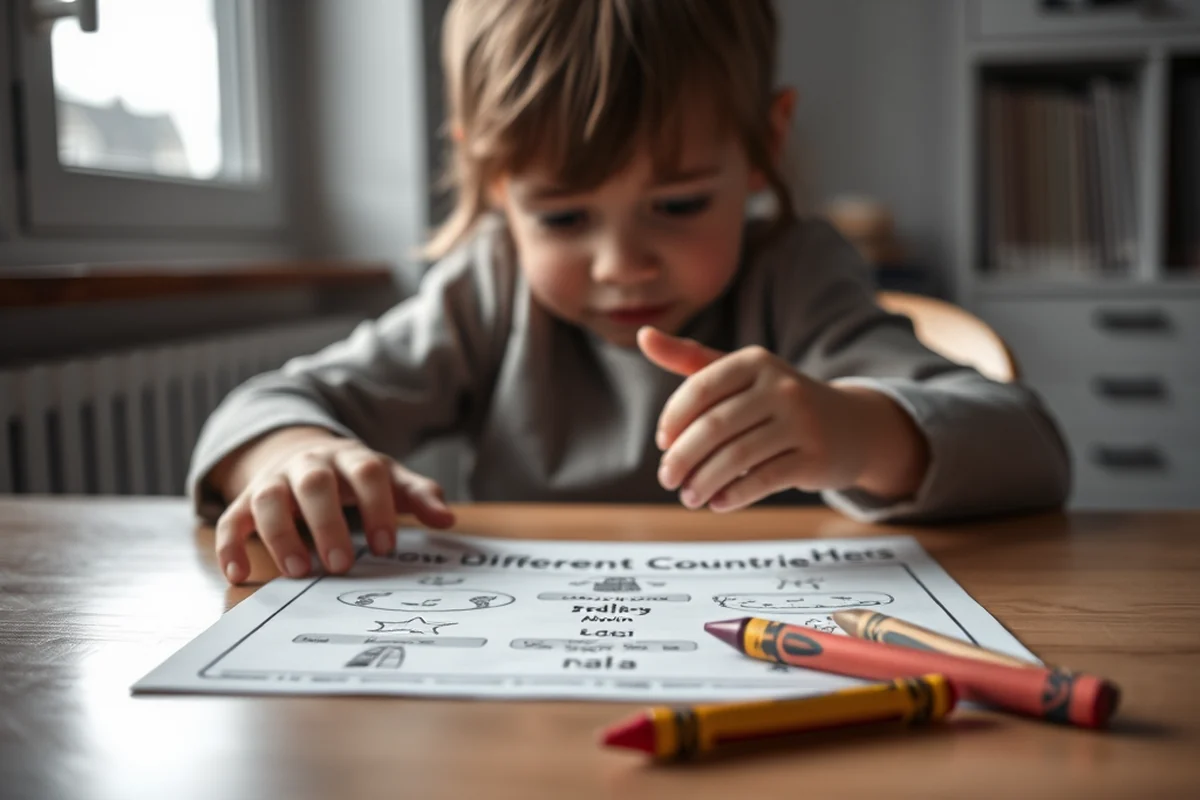
In Scandinavian countries, education is not only about academic achievement but also about the overall well-being of the student. Schools have shorter school days, and students are encouraged to spend time outdoors, which is believed to have a positive impact on mental health and focus.
The teaching style in these countries is often more relaxed and student-centered. Teachers act more as facilitators than instructors, and students are given more autonomy in their learning. This approach fosters creativity and independent thinking, which are essential skills in today's world.
I found this approach particularly inspiring, especially as a homeschooling parent. The emphasis on well-being and balance made me rethink how I structured my daughter's day, and I started incorporating more breaks and outdoor time into our routine.
Education is not just about knowledge — it's about nurturing the whole child.
Related: Different countries passports
Related: Why do different countries use different voltages
The Japanese System: Mastery Through Diligence and Discipline
Japanese students are known for their long hours in school and their strong work ethic. The system places a high value on memorization and repetition, which helps students master difficult subjects like math and science.
Another key aspect of the Japanese education system is the use of standardized testing. These tests are used to measure student performance and to identify areas where students may need additional support. This data-driven approach ensures that students are on track to meet their educational goals.
As a homeschooling parent, I found the Japanese approach to be both challenging and rewarding. It required a lot of commitment and dedication, but the results were impressive. My daughter was able to grasp complex concepts more quickly, and her confidence in her abilities grew significantly.
Consider using standardized tests to assess your child's progress and identify areas where they may need more support.
“I still remember the first time I realized how different countries approach education.”— Homeschooling in Different Countries editors
Related: Different countries
Related: What do different countries eat for breakfast
The American Model: Emphasis on Individual Achievement and Innovation
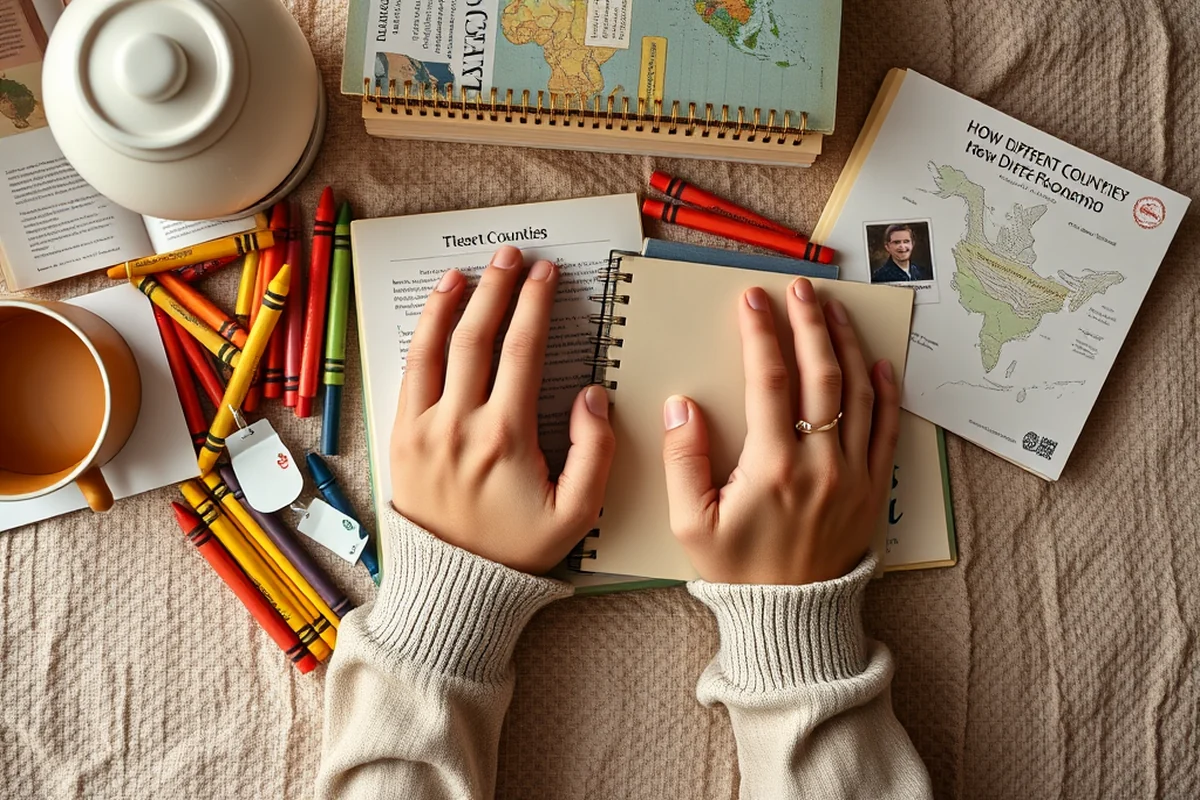
In the United States, education often emphasizes individual achievement and creativity. Schools encourage students to think outside the box and to pursue their interests. This approach has led to many groundbreaking innovations, including in technology and the arts.
Another unique aspect of the American education system is its emphasis on standardized testing, which is used to measure student performance and to ensure that schools are meeting certain educational standards. While this approach has its critics, it does provide a clear benchmark for student achievement.
As a homeschooling parent, I found the American model to be both inspiring and challenging. It required me to be more creative in my teaching methods and to provide my daughter with a variety of learning opportunities that would help her develop her unique talents.
Related: How different countries dress
The Chinese Approach: High Expectations and Competitive Learning
In China, students are expected to work hard from an early age, and the education system is highly competitive. This is reflected in the long hours that students spend in school and the high-pressure environment in which they study.[4]
One of the most notable aspects of the Chinese education system is its focus on rote learning and memorization. Students are required to memorize large amounts of information, which helps them perform well on standardized tests.
As a homeschooling parent, I found the Chinese approach to be both challenging and rewarding. It required a high level of commitment from me, but it also allowed my daughter to develop a strong work ethic and a deep understanding of the subjects she was studying.
The Finnish System: A Model of Simplicity and Equity
In Finland, the education system is designed to be simple and equitable. Schools are well-funded, and teachers are highly trained and respected. This has resulted in consistently high academic performance among Finnish students.
Another key aspect of the Finnish education system is its focus on student well-being. Students are not overburdened with homework, and they have more time to spend on hobbies and activities that interest them. This helps to reduce stress and promote a healthy lifestyle.
As a homeschooling parent, I was particularly impressed by the Finnish approach to education. It showed me that it's possible to create a learning environment that is both effective and enjoyable for students.
Education is not a race — it's a journey that should be enjoyed by all.
The Global Perspective: Lessons from Around the World
Each country has its own unique approach to education, and by studying these systems, we can learn from their strengths and adapt them to our own homeschooling environments. Whether it's the structured approach of Germany, the balance of Sweden, or the focus on mastery in Japan, there is something to be learned from every system.
One of the most valuable lessons I've learned from studying global education systems is the importance of adaptability. Education is not a one-size-fits-all model, and what works in one country may not work in another. It's essential to be flexible and to find what works best for your child.
By taking a global perspective on education, we can create a more well-rounded and effective homeschooling experience for our children. It's a journey that requires curiosity, open-mindedness, and a willingness to learn from others.
🧠 Younger Kids Approach
A simplified version of the activity for younger children, focusing on basic concepts and play-based learning.
📚 Older Kids Approach
A more complex version of the activity for older children, incorporating advanced concepts and critical thinking.
⏱️ No-Prep Version
A version of the activity that requires no preparation, making it ideal for spontaneous learning opportunities.
👥 Group Version
A version of the activity designed for group learning, which encourages collaboration and teamwork.
🚀 Extension Activity
An extension activity that allows students to explore the topic in greater depth and to apply their knowledge in new ways.
| The mistake | Why it happens | The fix |
|---|---|---|
| Assuming all education systems are the same | Assuming that all education systems are the same can lead to misunderstandings and ineffective learning strategies. | Take the time to research different education systems and identify what works best for your child. |
| Ignoring the cultural context of education systems | Ignoring the cultural context of education systems can lead to a lack of understanding and appreciation for different approaches to learning. | Take the time to learn about the cultural context of different education systems and how they influence teaching and learning. |
| Not adapting strategies to fit your child's learning style | Not adapting strategies to fit your child's learning style can lead to frustration and a lack of engagement. | Be flexible and adapt strategies to fit your child's learning style and your family's values. |
| Overlooking the importance of well-being in education | Overlooking the importance of well-being in education can lead to stress and burnout for both the student and the parent. | Make sure to incorporate a balance of academic and personal well-being into your homeschooling environment. |
How Different Countries
Common Questions
How can I incorporate global education strategies into my homeschooling?
What are the benefits of learning about different education systems?
How do I find resources to learn about different education systems?
What is the best way to learn from global education systems?
References
- Get to Know Culture Crown, a City of Charlotte ERN (charlottenc.gov)
- Comparative Indicators of Education in the United States and Other ... (nces.ed.gov)
- Ex. Rept. 113-12 - CONVENTION ON THE RIGHTS OF PERSONS ... (congress.gov)
- The Administration's Approach to the People's Republic of China (2021-2025.state.gov)
Cite this guide
Homeschooling in Different Countries (2026). How Different Countries. https://culturallywise.com/how-different-countries/
Feel free to cite or share this guide.